In Indian culture, food is love. The dining table is where families celebrate together — where birthdays are marked with extra mithai, where festivals begin with a shared meal, and where the daily rhythm of family life plays out in its most human form.
Yet in many Indian homes, the dining room receives less design attention than the living room or master bedroom. It is treated as a functional space — a place to eat — rather than a space designed for the quality of experience it hosts.
At Intero, we believe the dining room deserves to be one of the most considered spaces in the home. Here is how we approach it.
"The dining table is not just a piece of furniture. It is the centre of your family's life — design it with the reverence it deserves."
1. Choose the Right Table for Your Family's Reality
The dining table is the centrepiece of the room and must be chosen thoughtfully. In India, the key consideration is always seating capacity — not just everyday capacity, but festival capacity. A family of four may expand to twelve on Diwali, Eid, or a birthday celebration.
Our recommended approach:
- Extendable tables are the most practical solution for Indian families — they seat 6 daily and extend to 10–12 when needed
- For fixed tables, size up generously — a 6-seater used daily feels luxuriously spacious; a 4-seater feels cramped when guests arrive
- Choose a round or oval table for smaller rooms — they create a more intimate atmosphere and allow better conversation than rectangular formats
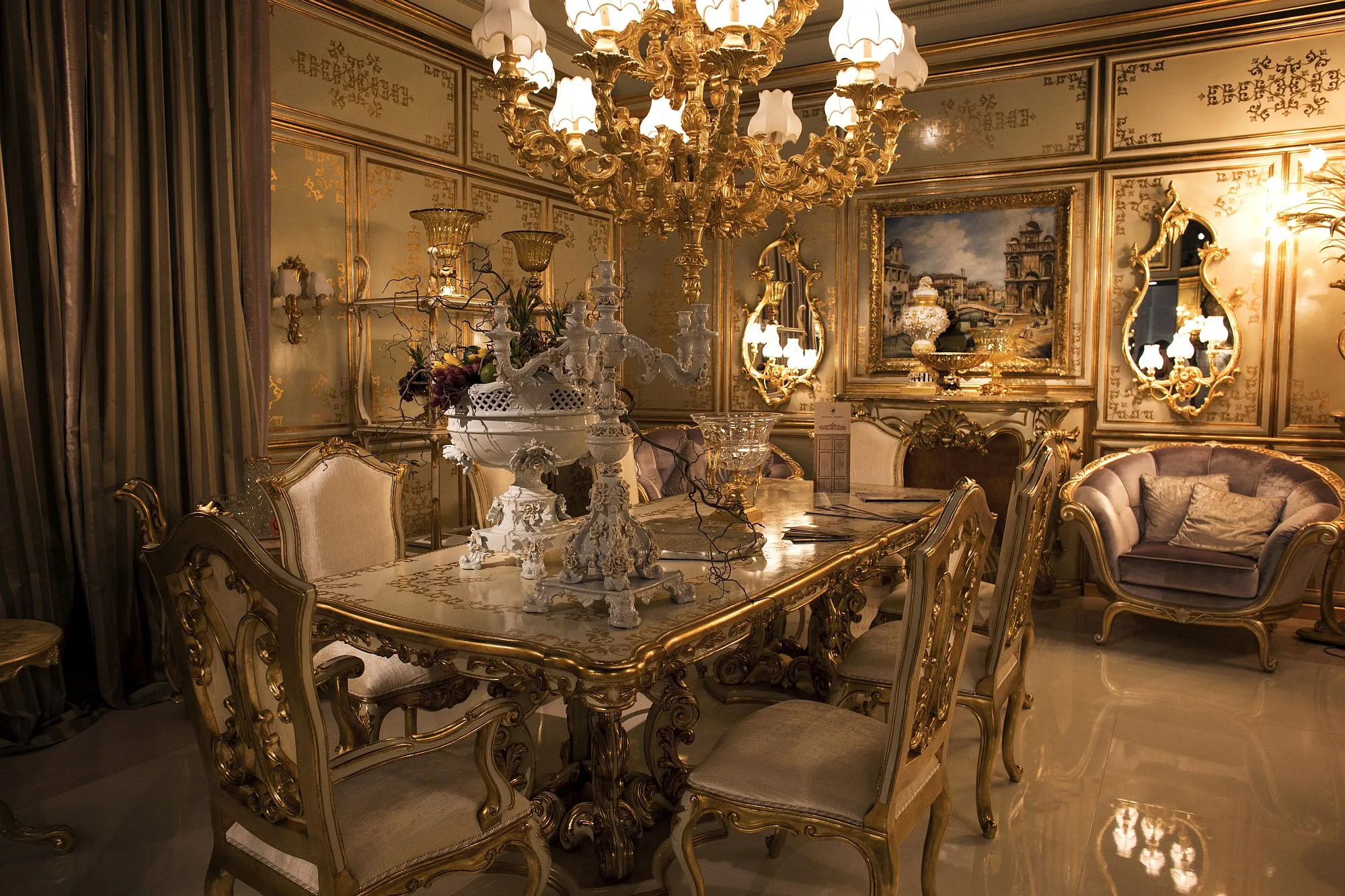
2. The Chandelier: The Most Transformative Element
If there is one element in the dining room that has the greatest design impact for the investment, it is the chandelier or pendant light above the table. In India, this is also one of the most emotionally resonant pieces — it sets the mood for every meal and every celebration held beneath it.
Rules for the perfect dining room chandelier:
- The bottom of the fixture should hang 75–85cm above the tabletop
- The diameter of the fixture should be about 50–60% of the table width
- Always use warm white bulbs — 2700K creates the most flattering, food-enhancing light
- Dimmable chandeliers are worth every rupee — the ability to shift from bright family dinner to intimate dinner party lighting is transformative
3. Design for Warmth — Emotionally and Physically
Dining rooms should feel warm — in every sense of the word. Material choices that create this sense of warmth:
- Wood: A solid wood dining table — teak, sheesham, or mango wood — brings natural warmth and ages beautifully over the years of family life it witnesses
- Upholstered chairs: Fabric or leather seating adds comfort for long meals and softens the visual weight of the space
- Rugs: A rug under the dining table (large enough that chair legs remain on it when pulled out) anchors the space and adds texture and warmth
- Art: A single large artwork on the feature wall behind the head of the table creates a focal point and personalises the room
"Every family meal is a memory being made. Your dining room should be worthy of the memories it holds."
4. Create a Crockery / Bar Display That Is Both Functional and Beautiful
Indian families tend to own beautiful crockery, glassware, and silverware that often lives hidden in boxes, brought out only for special occasions. We encourage our clients to display these pieces — proudly, beautifully, and accessibly.
A well-designed crockery unit or display cabinet in the dining room serves multiple functions: it provides essential storage, it displays the family's beautiful pieces, it adds character and heritage to the room, and it makes those pieces accessible for everyday use — not just festivals.
5. Leave Room to Breathe — And to Move
One of the most common mistakes in Indian dining rooms is overcrowding. The dining table is oversized for the room, or the crockery unit takes up too much wall space, leaving chairs with no room to pull out and no space to circulate comfortably when serving or clearing.
The minimum clearances we design around every table: 90cm on each side for chairs plus circulation. If the room cannot accommodate this comfortably, the table is too large. A smaller table in a room that breathes will always feel more luxurious than a large table that fills the space to its edges.